
A Q&A with Director Tim Coker on Square Pegs, Fringe Festival and all things absurd!

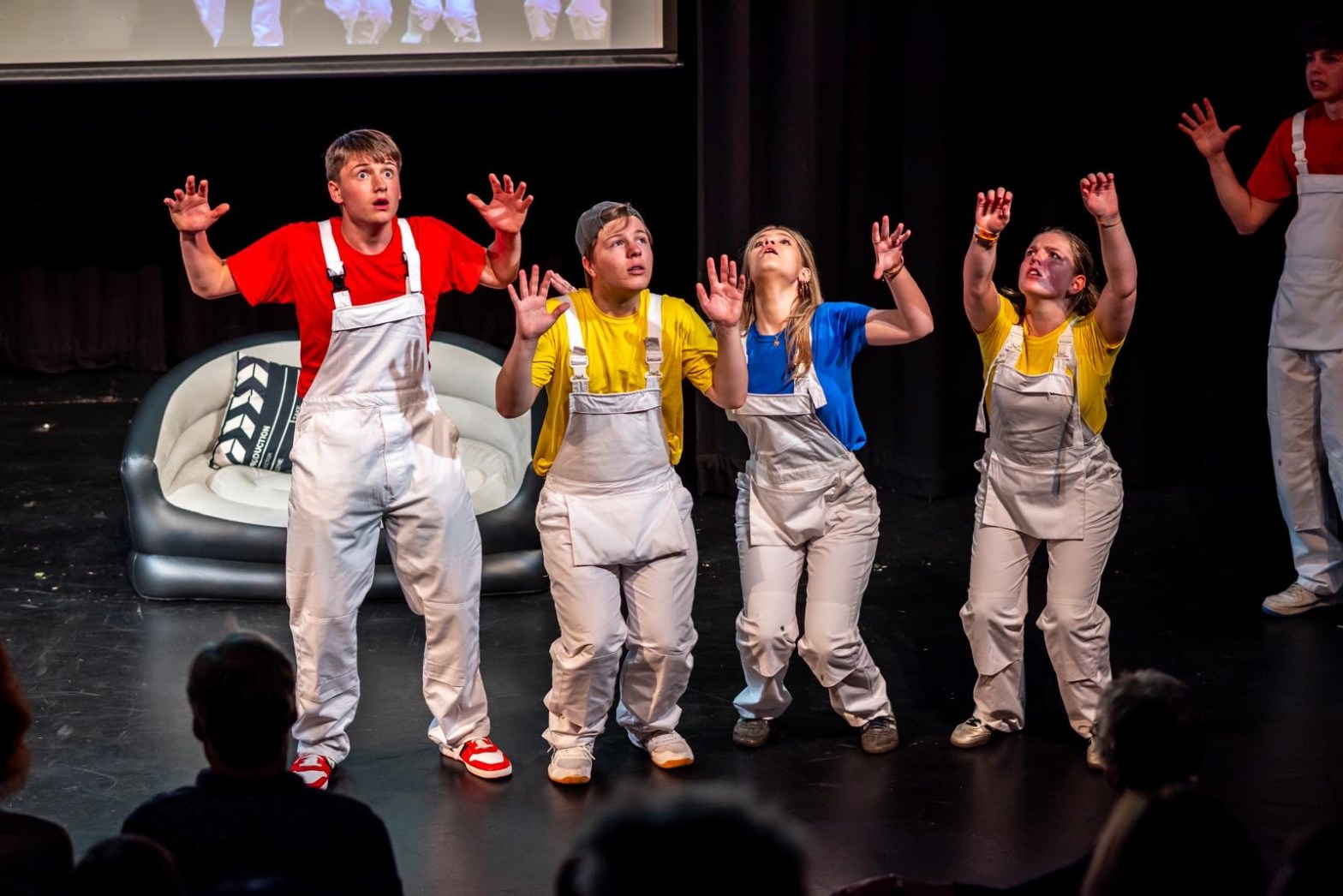
Eight teenagers take you back in time to an analogue age when telephones had wires and television was not so demanding. Square Pegs return with a brand-new, life-imitating-art play about growing up, which asks lots of questions about what it means to be human, but offers absolutely no answers whatsoever. Join Macready Theatre’s Offie-nominated Young Actors for 45 minutes of absurdist, fast-paced, fun-filled storytelling, to share time-travelling tales of nostalgia and a yearning for meaning when all seems fake.
C ARTS
C venues | C aquila
1 -10 August 2025, 12:20 (45m)
8-BIT DREAM
Writer Ben Grant
Director Tim Coker
Hi Tim thank you for being part of our interview series for Edfringe 2025. How does it feel to be back at C Arts this summer with your new show 8-bit Dream?
We are really excited to be back, we have been bringing new writing to Fringe for over 10 years now as a company and this one is a lot of fun! C Arts have been our home since our first show in 2013 and we love being part of the C family, it’s a great organisation which really supports young and emerging artists.
You had an amazing run last year with Georgie Dettmer’s 3 Couples, 2 Breakups, 1 Barbie and The Berlin Wall, with Mumble Theatre calling it “A Spectacular Showcase.” What does it mean to you to get this type of recognition for a show like this?
We have had some great reviews over the past few years, and our distinctive style of quirky, absurdist, new writing with a physical twist is quite unique at Fringe, so it’s always great to see reviewers finding our work interesting and appealing.
Do nerves still set in ahead of a run like EdFringe or are you able to chill and enjoy the process?
I love every minute, and can pretty much chill, being an ‘old hand’ at Fringe now! But the company changes every couple of years, as all our actors are aged 17 and they all move on to drama school or university to continue their training after they’ve spent a year or two with us. So for the cast I think it’s exciting and yes, I’d say they are nervous, but in a good way.
What was your first fringe experience like?
It was fantastic, I commissioned a young writer Laura Neal (who is now the lead writer on the new HBO Harry Potter series) to write a play for me and we came up to C Venues with her show ’15 Minutes’ in 2013. We had Libby Purves come to the first show to review us for The Times, which was a huge deal as you can imagine, but she was really encouraging. I learned a huge amount that year, about the logistics, marketing, flyering, and how to pace yourself for a run. It was such a great experience that, well, here we are again 10+ shows later!
If you could describe what the Fringe means to you in one sentence what would you say?
For me, Fringe is the best possible platform for inspiring young talent in the world, and it’s also a brilliant way for young actors to take risks.
Can you tell me a little bit about 8-bit Dream, what was it about Ben Grant’s text that connected with you?
This show, like all of the shows I have brought to Fringe, is commissioned for a specific group of young actors. We give emerging writers the chance to create new ensemble-based work to premiere at the Fringe, which is rare. We have a clear ‘USP’ with quirky absurdist comedy, but what’s really exciting is that it is made-to-measure, rather than doing an ‘off the peg’ published play. The writer gets to hear the actors’ voices through the process so it is genuinely collaborative and echoes the young actors’ lived experiences. The show Ben has written for us this year is a fascinating commentary on how media controls young people’s lives. The show takes us back to a nostalgic time before mobile phones and ‘unplugs’ the characters in the show, though the spectre of future digital influence on their lives emerges throughout the play. It’s very interesting as it came from the cast’s genuine feelings on how they wish that they could go back to a pre-internet era, free from social media.
Due to the nature of how festivals like the Fringe run how flexible are you with the production once you start running, do you prefer to stick to the text as is or do you allow for some movement?
We are lucky that we are working with original scripts, and have a ‘direct line’ to our writers. So we can adapt and tweak as we go along and probably about 40% of the show is devised in rehearsal, away from the text itself so that allows us huge amounts of freedom to keep developing the work as we go.
What are the biggest challenges you face bringing a show like 8-bit Dream to the festival?
It’s not cheap, everyone knows that, so we have to be mindful of costs all the time. The rapid get-in and get-out timing also means you have to be very creative in the way you tell your stories theatrically. Our show this year uses 2 live cameras on stage for instance, so we have a lot of tech to manage in a 10 minute window in our get-in, which will be stressful. But that’s also what makes bringing shows to the Fringe so exciting!
How did Macready Theatre Square Pegs Young Actors’ Company come about?
I created the company in 2013 when I was working with a group of young actors who were all considering pursuing careers in the industry but lacked the experience of performing outside of the partisan environment of their school. At the same time, I was keen to find a way to give emerging and early career writers an opportunity to write a new, experimental show for us to take to Edinburgh, and for the young actors to be part of that creative process, learning from the writer and seeing close-up how writers develop treatments into fully-formed scripts. It ticked a lot of boxes and has launched a lot of actors and writers’ careers in the 12 years it’s been running.
With theatre such an indelible part of our shared cultural experience what do you think can be done to champion new, emerging writers?
This is a great question. I think new writing is one of the most important parts of the creative ecosystem. Originality is hugely important to me. I strongly believe that we need to champion the new in every creative experience, otherwise we will be stuck in a loop of dull pastiche. That’s why AI as a ‘creative’ force is limited, it can only regurgitate what it gathers from existing work. So to stay a step ahead of the machines, we need to protect the new, the imaginative leaps and unexpected happy accidents of true creativity and harness that to ensure that we value this in education, in funding, in opportunity. We co-commission between Macready Theatre and Bloomsbury Festival and this kind of collaboration is really important, sharing and supporting new writers to try to find their original voices.
What would you say have been the most valuable lessons you’ve discovered about the theatre you create since your debut production?
For me personally, it’s about problem-solving. Theatre is smoke-and-mirrors stuff. The audience experience is the most important thing, and finding creative ways to hide the clunkiness of compromise to make the illusion feel magical and alive, that’s really hard. I am still working out how to make things work and every new show is a brilliant puzzle to solve. It never gets dull.
How important is the collaborative relationship between playwright and director?
For us this is absolutely integral. Not just with me as director, but (and probably more importantly) with the ensemble as a whole. Listening, compromising, problem-solving together allows us all to meet the same endpoint, to give an audience the best possible experience within our means.
Is there any advice or tips you would offer an emerging playwright?
Be original, whatever it takes, be original and surprise yourself. Don’t do what it says on the tin. That’s boring.
And finally, what message would you like your audiences to take with them from 8-bit Dream?
That young people are conscious of the (negative) influence of social media on their lives, and look to the simpler, analogue time (the one their parents enjoyed growing up) with a degree of envy. If we understand that, then as adults we can maybe understand better the control that media has over all of us, not just young people, and that as we doom-scroll for hours ourselves, we should realise that it’s GenZ who probably have more awareness than we do about how all this information works and what to do to escape the algorithm.

 Macready Theatre